
Blog
Turnkey Interior vs Regular Interior Design: What Should You Choose?

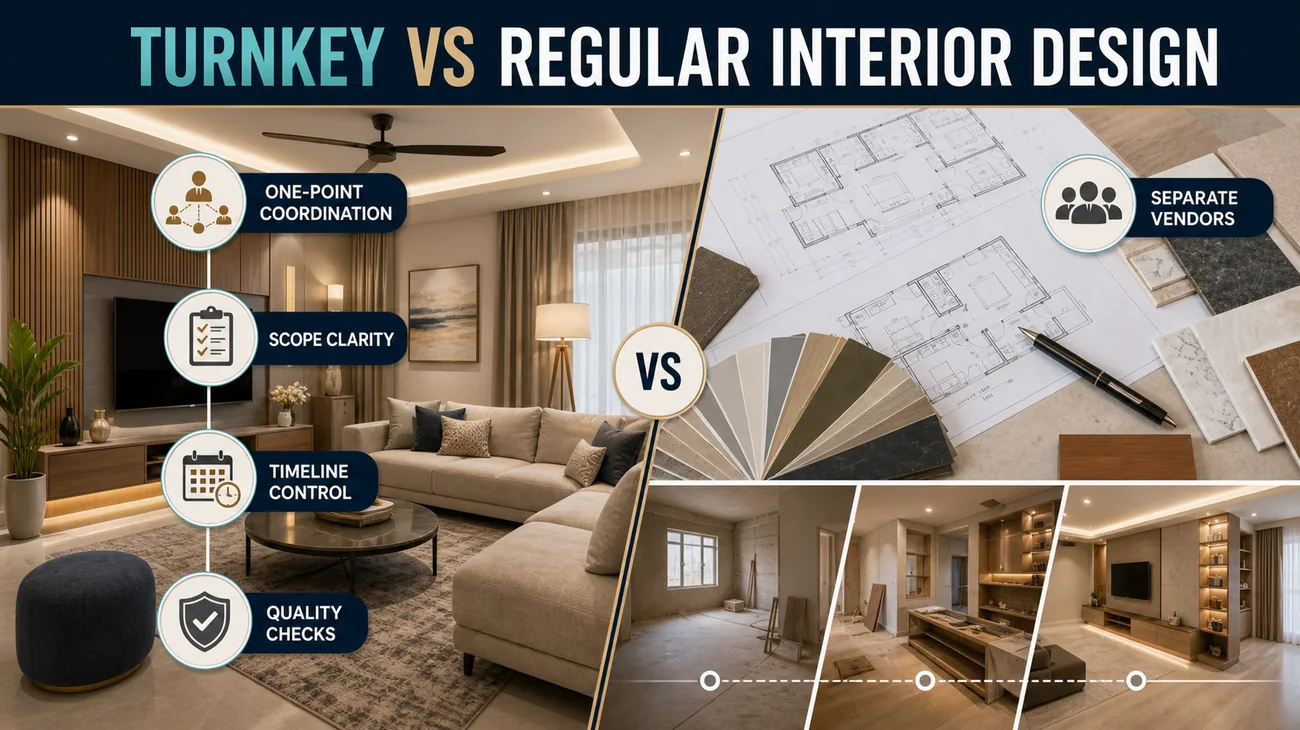
Choosing an interior design service is not only about selecting a style. It also determines who will coordinate drawings, materials, contractors, site work and final handover. Two common approaches are turnkey interior execution and design-only or separately managed execution.
Both approaches can work, but they suit different levels of involvement, project complexity and decision-making. Understanding the difference before appointing a team helps you compare proposals fairly.
What Is Turnkey Interior Design?
In a turnkey interior project, one team takes responsibility for an agreed scope from design development through execution and handover. Depending on the contract, this may include space planning, technical drawings, material coordination, custom furniture, site supervision and vendor management.
The key feature is consolidated responsibility. The homeowner or business owner communicates with a primary team instead of coordinating every trade independently. Explore Ink Design Studio’s turnkey interior solutions to understand the service approach.
What Is Regular or Design-Only Interior Service?
In a design-only arrangement, the designer may provide concepts, layouts, selections and drawings, while the client appoints contractors and manages procurement or execution separately. Some projects use a hybrid approach in which the designer offers periodic supervision but vendors remain under separate contracts.
This structure gives the client direct control over individual appointments, but it also requires more time for comparison, coordination and issue resolution.
Turnkey vs Regular Interior Design at a Glance
| Factor | Turnkey approach | Separately managed approach |
|---|---|---|
| Primary coordination | Handled by one appointed team for the agreed scope | Client coordinates designer, contractors and suppliers |
| Communication | Usually a central point of contact | Multiple points of contact |
| Design-to-site continuity | Design and execution decisions are coordinated together | Requires careful transfer of information between parties |
| Client involvement | Focused on approvals and key decisions | Higher involvement in procurement and daily coordination |
| Cost comparison | Evaluated through a consolidated scope | Evaluated through several separate quotations |
| Accountability | More consolidated when the scope is clearly documented | Split across several contracts and vendors |
When a Turnkey Approach Makes Sense
A turnkey service can be useful when the project involves several connected trades or when the client cannot coordinate the site daily. It may also suit homeowners who want design intent, material specifications and execution decisions managed within one documented scope.
- You prefer one primary team for coordination.
- The project includes custom furniture and multiple technical trades.
- You want drawings, procurement and site sequencing to be aligned.
- Your availability for daily vendor management is limited.
- You value a structured approval and handover process.
Turnkey does not mean the client has no involvement. Timely approvals for layouts, finishes, samples and changes remain essential.
When Separate Design and Execution May Suit You
A separately managed approach may suit clients who have trusted contractors, strong procurement knowledge or the time to oversee site decisions personally. It can also work for limited-scope upgrades where only a few independent items are changing.
- You already have experienced contractors for the required work.
- You want to purchase materials directly from selected suppliers.
- The project has a small or clearly separated scope.
- You can review technical questions and coordinate site meetings regularly.
The success of this approach depends on clear drawings and disciplined communication. A gap between design intent and contractor interpretation can affect quality, dimensions or finishes.
Compare the Scope, Not Just the Final Number
Two quotations may appear different because they include different work. Compare the same specifications and quantities before judging cost. Check whether the proposal includes demolition or civil changes, electrical work, plumbing, ceiling work, painting, fixed furniture, hardware, countertops, transport, installation and final cleaning.
Also confirm which items remain outside the contract. Appliances, loose furniture, decorative lights, curtains or specialist systems may be treated separately. A detailed inclusion and exclusion list is more useful than a single summary figure.
Questions to Ask Before Appointing an Interior Team
- What drawings and approvals will be provided before execution?
- Who coordinates site measurements and technical services?
- How are material brands, finish codes and hardware documented?
- How will proposed changes affect the scope and schedule?
- Who is responsible for site supervision and quality checks?
- What is the process for progress updates and final handover?
Residential and Commercial Projects Need Different Coordination
Home interiors focus strongly on personal routines, storage and long-term comfort. Offices and commercial spaces may involve operational requirements, brand experience, technology, durability and phased working conditions. A team experienced in commercial interior design should document these needs before execution.
Choose the Model That Matches Your Availability
The right choice depends on how much coordination you want to handle, the number of trades involved and the clarity of the proposed scope. Whichever model you choose, insist on measured drawings, documented specifications, clear responsibilities and an approval process.
Review Ink Design Studio’s completed interior projects and contact the team to discuss whether a turnkey or separately managed approach fits your project.
